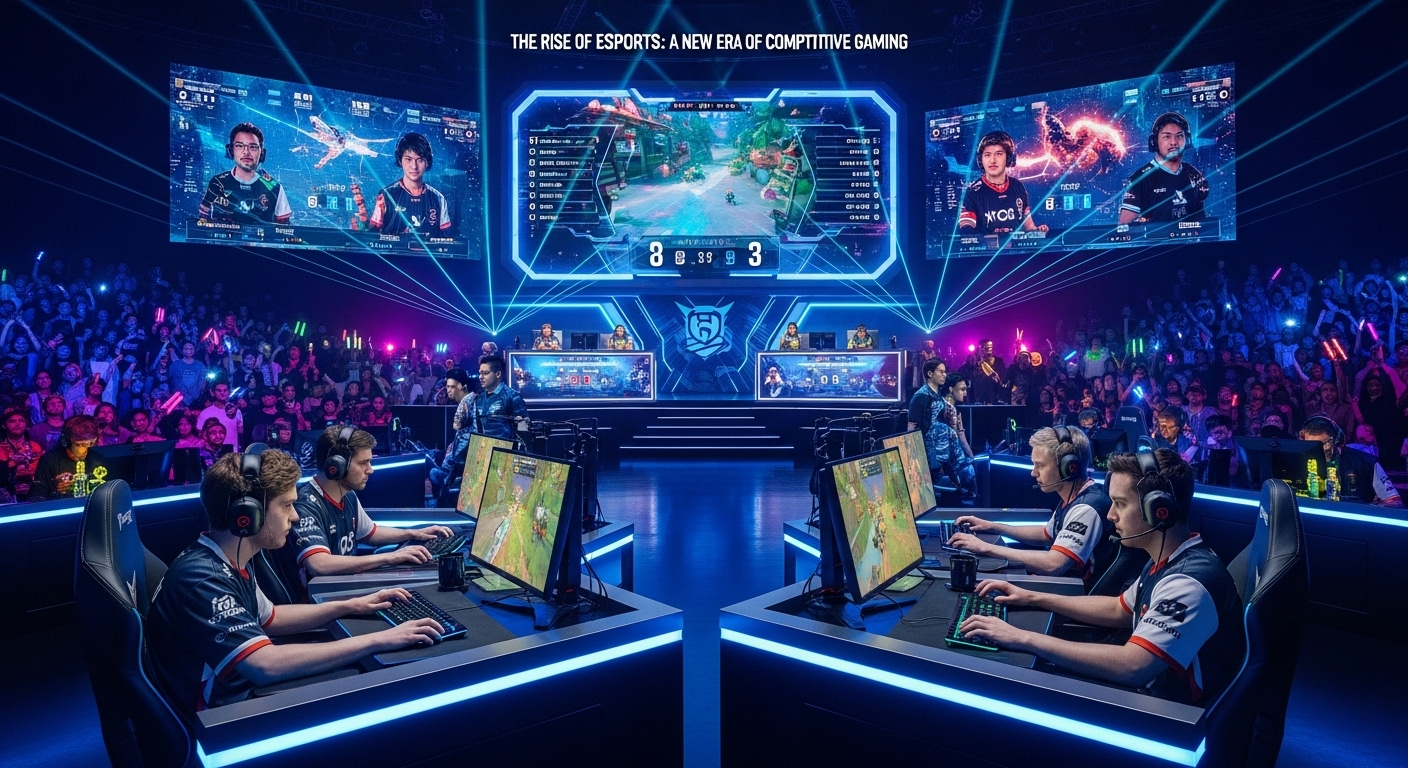

Esports, short for electronic sports, has emerged as a global phenomenon in the past decade. Once a niche hobby for gamers, competitive gaming now garners millions of viewers, generates billions in revenue, and attracts a massive professional scene with top-tier tournaments and sponsorships. But what has driven this dramatic rise in esports’ popularity, and what does the future hold for this digital sports revolution? In this blog post, we’ll dive into the factors contributing to the rise of esports, its impact on the gaming industry, and how it has reshaped the way we perceive traditional sports.
What Is Esports?
Esports refers to competitive video gaming, where players or teams compete against each other in organized tournaments, often with large cash prizes, sponsorships, and significant media attention. The games in question span a wide variety of genres, from real-time strategy games like StarCraft II and Warcraft III, to first-person shooters like Counter-Strike: Global Offensive, and battle royale games like Fortnite and PUBG. Esports isn’t limited to just playing games; it also includes broadcasting, commentary, fan engagement, and content creation, making it an all-encompassing entertainment industry.
The Key Drivers of Esports’ Growth
1. Advancements in Technology
The technological advancements of the 21st century have played a crucial role in fueling the growth of esports. The evolution of personal computers, internet speeds, and game development technology has made competitive gaming more accessible and enjoyable. Graphics quality, server stability, and game mechanics have reached unprecedented levels, ensuring that esports games are engaging for both players and spectators.
With the rise of online gaming platforms like Steam, Riot Games’ League of Legends client, and battle.net, players can easily connect to games without the need for expensive equipment or professional setups. This democratization of gaming means that players from all over the world can participate in competitions, often from the comfort of their homes.
Additionally, the growth of high-speed internet has made it possible for large-scale online tournaments to occur with low latency, further enhancing the esports experience. Streaming services such as Twitch, YouTube Gaming, and Facebook Gaming have allowed esports events to reach a global audience, creating a new breed of fan culture centered around gaming.
2. The Evolution of Streaming and Content Creation
The rise of streaming platforms, especially Twitch, has completely transformed the esports landscape. Originally created as a way for players to showcase their gaming skills, Twitch has become the go-to hub for esports competitions, fan interactions, and live commentary. Professional esports organizations use Twitch not only to stream their tournaments but also to build a community around their teams and players.
Streaming platforms have given rise to a new breed of influencers: content creators. These streamers create videos, share insights, and connect with their followers in real-time, cultivating massive fanbases. Whether it’s watching a League of Legends pro team practice for an upcoming event, or simply enjoying a casual Fortnite stream, millions of people worldwide now tune in to watch esports.
These platforms have turned professional gamers into celebrities. Streamers like Ninja, Shroud, and Pokimane have become household names, attracting sponsorships from major brands and elevating the entire esports industry into the mainstream. Their ability to engage fans through interactive live streams and behind-the-scenes content has created a unique relationship between players and their audiences.
3. Professionalization of the Industry
Another key factor in the growth of esports has been the increasing professionalization of the industry. Esports has transformed from a hobbyist pursuit to a serious career option, with organizations now recruiting and paying players for their talents. Esports teams function much like traditional sports teams, with dedicated coaches, analysts, managers, and support staff ensuring the players are performing at their best.
Major esports tournaments have also attracted attention from investors and sponsors, elevating the financial stakes of competitive gaming. For instance, Dota 2’s The International tournament is one of the largest esports events in the world, boasting multi-million-dollar prize pools, largely funded by community contributions through in-game purchases. Similarly, games like Counter-Strike: Global Offensive and League of Legends host tournaments that attract sponsorships from multinational companies like Coca-Cola, Intel, and Red Bull.
The increasing professionalism of the scene has led to the establishment of esports leagues, just like traditional sports leagues. The Overwatch League (OWL), League of Legends Championship Series (LCS), and Call of Duty League (CDL) are all examples of franchised, team-based competitions that offer long-term contracts and substantial earnings for players. These leagues bring stability to esports players and make the career path more sustainable, which in turn attracts more young talent.
4. Growing Global Audience
Esports has become a truly global phenomenon, transcending geographical and cultural boundaries. While gaming has always been a popular pastime, esports has the added element of competition and community that makes it even more appealing. The accessibility of esports has enabled players from all over the world, whether from North America, Europe, Asia, or South America, to participate in high-level competitions.
In countries like South Korea, esports is already recognized as a legitimate sport, with professional players treated like celebrities. The impact of esports in countries such as China and the United States is rapidly growing, as these markets begin to invest heavily in gaming infrastructure, tournaments, and content creation. As esports continues to expand, so does its global audience, with millions of fans tuning in to watch live broadcasts or participating in online forums and communities.
The rise of esports has also led to its integration into traditional sports networks. Major broadcasters like ESPN, Turner Sports, and even BBC have started to air esports events, providing a broader platform and legitimacy to the growing industry. This fusion of gaming with mainstream media outlets further cements the cultural importance of esports.
Esports and Its Impact on Traditional Sports
The rise of esports has had a significant impact on traditional sports, both in terms of viewership and sponsorship. Esports has proven to be a direct competitor to traditional sports, especially among younger audiences. While traditional sports still have massive fanbases, esports offers a fresh and digital alternative to traditional forms of entertainment.
One of the key reasons for esports’ appeal to younger generations is its accessibility. Unlike traditional sports that often require physical infrastructure, such as stadiums or fields, esports is played online, requiring only a computer or gaming console. Additionally, esports doesn’t have the barriers to entry that physical sports might have—no expensive training equipment, travel, or coaching is necessary.
Moreover, the digital nature of esports makes it appealing to a generation that is more accustomed to online entertainment. With live streaming platforms, on-demand content, and real-time updates, esports aligns with the habits of digital natives who prefer quick access to entertainment on their terms.
Sponsorship deals and partnerships have also been a growing area of overlap between esports and traditional sports. Major sports brands, such as Adidas and Nike, have entered the esports scene by sponsoring teams or producing esports-related merchandise. Partnerships between esports organizations and traditional sports teams, such as the Dallas Cowboys’ esports team or the Golden State Warriors’ esports involvement, showcase the increasingly intertwined nature of the two industries.
The Future of Esports: What’s Next?
Looking to the future, esports is poised for even more growth and innovation. The ongoing developments in virtual reality (VR) and augmented reality (AR) have the potential to revolutionize the way people experience competitive gaming. Imagine a future where players compete in fully immersive VR tournaments, or where fans can watch their favorite teams in 360-degree, interactive arenas.
Additionally, the continued expansion of mobile gaming will likely play a significant role in esports’ future. Mobile games such as PUBG Mobile and Arena of Valor have already seen massive success in markets like China and Southeast Asia, and these games are expected to be key players in esports moving forward.
The integration of esports into academic institutions also holds promise for its future. Universities and colleges have started offering esports scholarships, and many institutions are setting up dedicated esports arenas to foster young talent. This shift represents a long-term investment in esports and provides a pathway for players to pursue competitive gaming as a career, alongside their academic studies.
Lastly, as esports becomes more mainstream, its social and cultural impact will continue to evolve. With the rise of esports, we’re seeing a new form of entertainment that brings people together through shared passion, competition, and community—breaking down barriers in the process.
Conclusion
Esports is no longer a niche hobby—it has become a global entertainment industry that rivals traditional sports in terms of viewership, sponsorships, and revenue. With advancements in technology, the rise of streaming platforms, the professionalization of the industry, and a growing global audience, esports has firmly established itself as a cultural and economic force. As esports continues to evolve, it will be exciting to see how this digital revolution shapes the future of competitive gaming and the broader entertainment landscape.