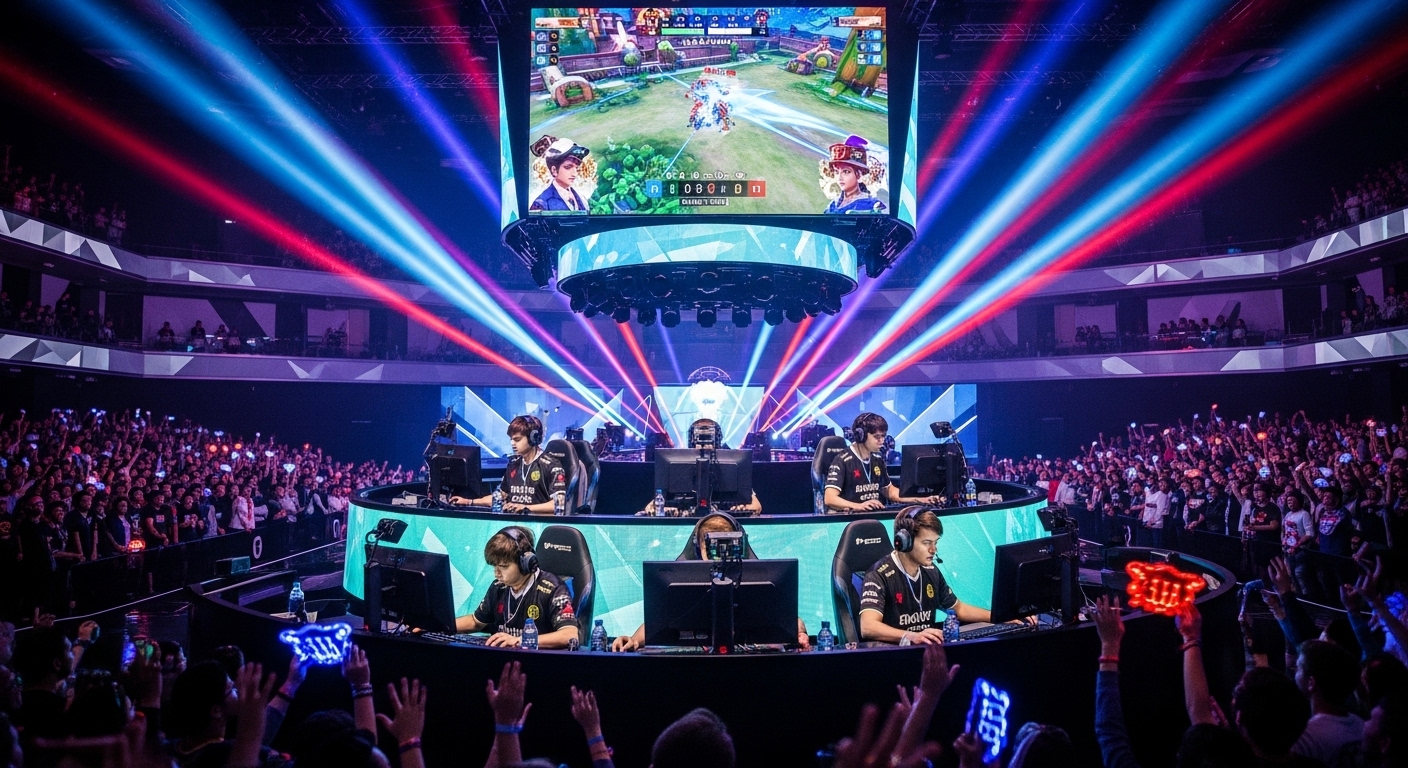

Esports has grown into one of the most exciting and fast-paced forms of entertainment in the world. What began as small gatherings in gaming cafes or online tournaments has evolved into massive live events filling arenas once reserved for traditional sports and concerts. These grand venues, many with deep historical significance, have become the battlegrounds for some of esports’ most unforgettable finals.
Today, these iconic places symbolize more than just competition; they represent how gaming has earned its place on the world stage. From world-famous stadiums to legendary theaters, these venues have hosted moments that defined esports history. In this blog, we explore the best historic venues for esports finals — places where passion, skill, and technology collided to create global spectacles.
The Importance of Venue in Esports Culture
Venues play a crucial role in shaping the atmosphere of an esports final. They amplify excitement, connect fans physically and emotionally, and give tournaments a sense of grandeur that online broadcasts alone can’t match.
A well-chosen venue does more than host players — it becomes part of the story. The energy of a live crowd cheering every kill, clutch, or game-winning play transforms esports from digital competition into a shared cultural experience.
Historic venues, in particular, carry symbolic weight. They bridge the old and new worlds of competition, proving that esports belongs alongside traditional forms of sport and entertainment. Each of these locations has witnessed not just epic gameplay, but the evolution of gaming itself into a global phenomenon.
1. Madison Square Garden – New York City, USA
Few places in the world carry the prestige of Madison Square Garden (MSG). Known as “The World’s Most Famous Arena,” MSG has hosted everything from boxing legends to championship basketball — and now, it’s a staple of major esports events.
When esports took over Madison Square Garden, it sent a clear message: competitive gaming had arrived on the global stage. The venue’s massive capacity, world-class lighting, and advanced sound systems created an electrifying environment for both players and fans.
Events like the League of Legends North American Championship and Call of Duty World League Finals held at MSG became milestones in esports history, attracting tens of thousands of live attendees and millions watching online.
The legacy of Madison Square Garden makes it more than just a venue — it’s a symbol of legitimacy, showing that esports deserves a place among traditional sporting greats.
2. Staples Center (Now Crypto.com Arena) – Los Angeles, USA
The Staples Center in Los Angeles, now known as the Crypto.com Arena, is one of the most iconic esports venues in the world. It was here that the 2013 League of Legends World Championship made history, selling out within minutes.
That event marked a turning point for esports, demonstrating its ability to fill major sports arenas. The atmosphere inside was electric, with thousands of fans cheering as SK Telecom T1 defeated Royal Club to claim the world title.
The Staples Center’s significance goes beyond its size. Hosting the finals there proved that esports could rival traditional sports in spectacle, fan engagement, and cultural impact. The success of that event inspired countless other tournaments to move from convention halls to full-scale stadiums.
Today, it remains one of the most cherished venues in esports history — a place where gaming officially stepped into the mainstream spotlight.
3. Wembley Arena – London, United Kingdom
The SSE Arena, Wembley is one of the UK’s most historic entertainment venues, and it has also become a landmark for esports in Europe. Over the years, it has hosted a range of esports events, from Call of Duty World League tournaments to Rocket League Championships.
Wembley carries a deep connection to British sporting culture, and its adoption by esports represents how gaming has woven itself into national identity. When esports finals are held here, they draw both passionate gamers and curious spectators — uniting generations under one roof.
The mix of history, atmosphere, and cutting-edge production makes Wembley one of the most memorable venues for esports finals in Europe. It’s a place where legacy meets innovation, proving that digital sports can thrive in spaces once dominated by music icons and athletic legends.
4. Sangam Stadium – Seoul, South Korea
No discussion of esports venues is complete without mentioning Sangam Stadium in Seoul, South Korea — a country often referred to as the birthplace of modern esports.
This massive stadium, originally built for the 2002 FIFA World Cup, has hosted some of the most legendary esports events in history, including the 2014 League of Legends World Championship Finals. The spectacle drew over 40,000 fans in person and millions online, setting new records for viewership and production quality.
South Korea’s deep esports culture made Sangam Stadium the perfect venue. The event combined traditional sports grandeur with the intensity of competitive gaming, complete with fireworks, live music, and dramatic player entrances.
The image of tens of thousands of fans filling a football stadium to watch video games live remains one of the defining moments in esports history.
5. Beijing National Stadium (The Bird’s Nest) – Beijing, China
The Bird’s Nest, originally constructed for the 2008 Olympic Games, has since become one of the grandest esports venues on the planet. It hosted the 2017 League of Legends World Championship Finals, one of the most breathtaking productions in esports history.
With more than 80,000 seats, the Bird’s Nest provided an Olympic-level stage for digital athletes. The event featured massive LED screens, synchronized drone shows, and a breathtaking opening ceremony that rivaled the world’s biggest sporting events.
The Bird’s Nest finals symbolized how far esports had come — from underground competitions to global spectacles commanding the same level of prestige as the Olympics. For many fans, it was a moment that solidified esports as a legitimate part of global culture.
6. Spodek Arena – Katowice, Poland
The Spodek Arena in Katowice has become synonymous with esports excellence, largely thanks to the Intel Extreme Masters (IEM) series. What began as a small tournament in 2013 evolved into one of the most celebrated annual esports festivals in the world.
Every year, tens of thousands of fans travel to Katowice to experience IEM firsthand. The Spodek’s unique UFO-like design and packed stands create one of the most electrifying atmospheres in competitive gaming.
What makes Katowice special is its authenticity. Unlike venues that merely host esports events, Spodek is esports culture. It’s the place where legends are made, where fans and players share a collective passion that feels more like a movement than a tournament.
For many professionals, winning at Spodek is a career-defining achievement — a mark of true greatness.
7. Barclays Center – Brooklyn, New York
The Barclays Center has established itself as another premier destination for esports, hosting events like the Overwatch League Grand Finals and Rocket League World Championships.
Its sleek modern design, incredible acoustics, and central location make it a perfect arena for both live audiences and broadcast production. The Overwatch League’s 2018 finals at Barclays marked a milestone for franchised esports, filling the arena with roaring fans from around the world.
The Brooklyn crowd’s energy was contagious, and the high production value made the event feel like a traditional championship — complete with hype, rivalries, and emotional storylines. The success of these events cemented Barclays as one of the most important esports venues in North America.
8. Accor Arena – Paris, France
Paris’s Accor Arena (formerly Bercy Arena) is another iconic venue that has embraced esports in grand style. Known for hosting music legends and major sporting events, it became a landmark for European esports after hosting multiple League of Legends European Championships (LEC) and Valorant Champions Tour (VCT) events.
Its circular seating design brings fans close to the action, creating an intimate yet high-energy experience. The 2019 League of Legends World Championship Group Stage held here showcased stunning production, with cinematic lighting and immersive stage setups.
Accor Arena’s fusion of historic prestige and cutting-edge technology represents the future of esports finals — where tradition meets innovation under one roof.
9. Mercedes-Benz Arena – Berlin, Germany
The Mercedes-Benz Arena in Berlin has become one of Europe’s esports capitals, hosting events like the League of Legends Worlds 2015 Finals, PUBG Global Invitational, and ESL One Berlin Major.
Germany’s strong gaming culture and the arena’s state-of-the-art facilities make it an ideal choice for international finals. The 2015 Worlds Finals, in particular, were groundbreaking — combining massive live attendance with millions of online viewers.
Berlin’s venue continues to serve as a hub for both competitive play and fan celebration, helping Europe cement its role in global esports history.
10. KeyArena (Now Climate Pledge Arena) – Seattle, USA
The KeyArena, now renamed the Climate Pledge Arena, holds a special place in esports history as the longtime home of The International, Dota 2’s world championship. For years, this arena witnessed some of the most intense, emotional, and lucrative tournaments in gaming history.
The energy of the Seattle crowd, the massive prize pools, and the emotional narratives that unfolded there turned KeyArena into hallowed ground for esports fans. Players often describe walking onto that stage as a career-defining moment.
It wasn’t just about the competition — it was about the community. The International transformed Seattle into the heart of esports for nearly a decade, proving that passionate fans could turn any venue into a cathedral of competition.
11. KBS Arena – Seoul, South Korea
Another iconic South Korean venue, the KBS Arena, has hosted countless major tournaments, particularly for StarCraft — a game that helped define esports in its earliest years.
In the 2000s, KBS Arena became the epicenter of professional gaming, broadcasting matches to millions across the nation. The energy inside was comparable to that of traditional sports finals, complete with fan chants, banners, and celebrity-level player entrances.
For many, the legacy of KBS Arena represents the birth of modern esports culture — where competitive gaming transitioned from hobby to national pride.
12. Arthur Ashe Stadium – New York City, USA
Home to the US Open Tennis Championships, Arthur Ashe Stadium entered esports history in 2019 when it hosted the Fortnite World Cup Finals.
This event was monumental, bringing together 23,000 fans to witness one of the most ambitious esports tournaments ever produced. The stage design, live commentary, and crowd engagement matched the spectacle of any traditional world championship.
The Fortnite World Cup proved that esports could thrive in iconic sporting arenas and reach audiences of all ages. For many fans, it marked a defining moment — where gaming officially stood shoulder to shoulder with global sports events.
The Legacy of Historic Venues in Esports
What makes these venues so special isn’t just their size or design — it’s their symbolism. They show how far esports has come, from basement LAN parties to global arenas filled with thousands of fans.
Every time a historic venue hosts an esports final, it sends a message to the world: gaming is more than entertainment — it’s culture, competition, and community. These events create shared memories that inspire future players, organizers, and fans to dream even bigger.
Historic venues connect esports to the legacy of human competition. Whether it’s the roar of the crowd in Seoul or the lights of Madison Square Garden, these moments remind us that esports isn’t replacing traditional sports — it’s expanding what competition means in the 21st century.
Conclusion
From the streets of Katowice to the grandeur of the Bird’s Nest, the growth of esports has transformed some of the world’s most historic venues into digital coliseums. These arenas have hosted unforgettable finals, marking milestones that redefined entertainment, technology, and sportsmanship.
The best historic venues for esports finals are more than physical spaces — they are monuments to progress, innovation, and human passion. They represent the bridge between tradition and the future, where millions gather — both in person and online — to celebrate the art of competition in its newest, most electrifying form.
As esports continues to evolve, one thing is certain: these legendary venues will forever stand as the sacred grounds where digital heroes became legends.